AHS students and faculty create AI-enabled improvements to patient care and health data at CAIDF hackathon
Body
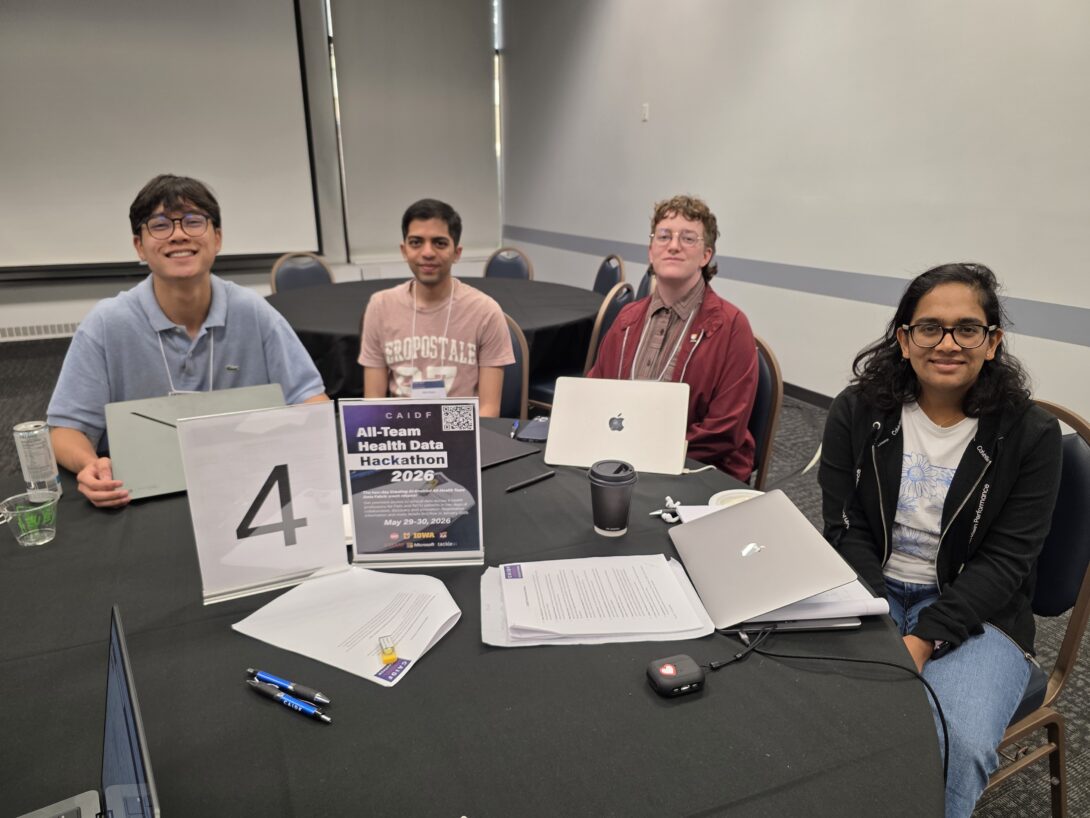
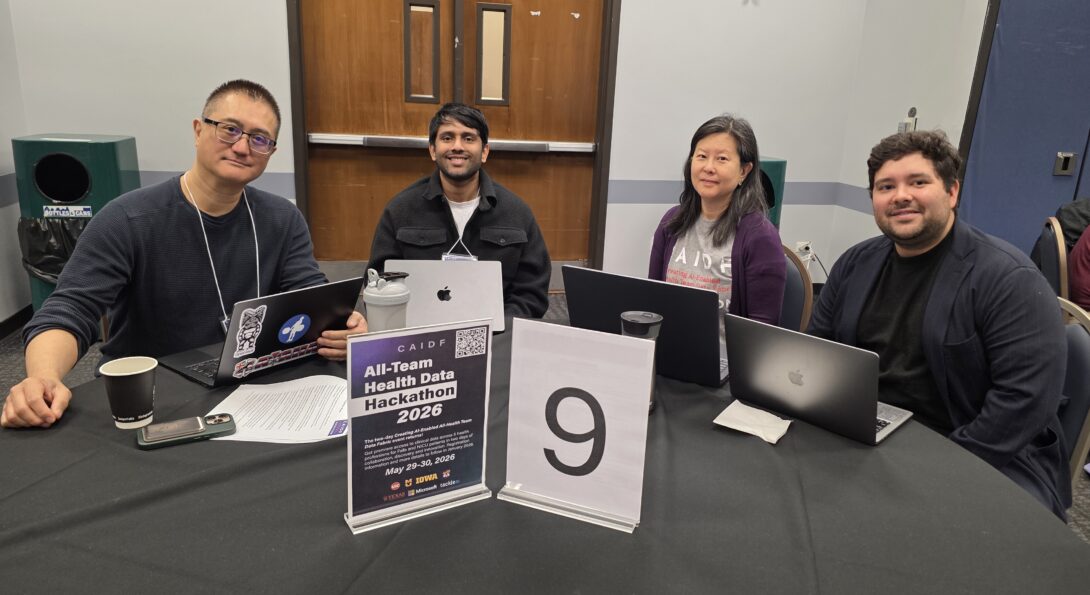
Students and faculty from AHS stood out among participants in this year’s hackathon hosted by Creating AI-Enabled All-Health Team Data Fabric. Representatives from the college brought home first and second-place wins.
The second annual hackathon, held the last weekend in May at the Crowne Plaza Chicago Hotel, awarded $50,000 in prizes to teams from around the country who created innovative health solutions using CAIDF’s massive, all-team data sets.
Representing more than 80,000 patients from three major health systems, the comprehensive data were gathered from full care teams — physicians, nurses, physical therapists, occupational therapists and speech-language pathologists — that treat patients who have experienced one of two complex care situations: NICU care or falls that lead to serious injury. Research has shown that datasets that include observations from various providers on the care team, not just physicians, yield more accurate predictions across different measures, such as the risk of dying in a hospital, than physician notes and lab results alone.
Hackathon competitors worked in multidisciplinary teams to summarize, integrate and visualize this extensive data so that clinicians can see a clearer picture of patient progress and future needs. Participants also created point-of-care innovations that connect clinical events and clarify the relationships between medical interventions and patient outcomes.
Body cont.
“It brought me great joy to see different professions and expertise come together with great, innovative ideas within a short period of time to improve the lives of NICU babies and adults who fall,” said BHIS professor Andrew Boyd, co-principal investigator of CAIDF and hackathon event organizer.
Lawrence Salud, PhD student in BHI, was a part of the first-place winning team, which developed a clinical decision-making project called NextStep.ai. The platform provides care teams with advanced summaries of patient data. To prevent the AI from fabricating or hallucinating information from multidisciplinary patient notes, the team incorporated a gating mechanism that refuses to guess. The system will return a verdict of “proceed” if the evidence is complete, “gather” to identify missing evidence, or “abstain” to escalate out-of-scope queries to a clinician.
“There is a unique energy that happens when you put developers, data scientists and healthcare experts in a room together and support them with nationally accomplished healthcare advisory,” said Salud. “That highly collaborative environment allows you to learn from complementary perspectives, rapidly prototype and bring solutions to life in less than 48 hours. I am fortunate to have partaken in this experience.”
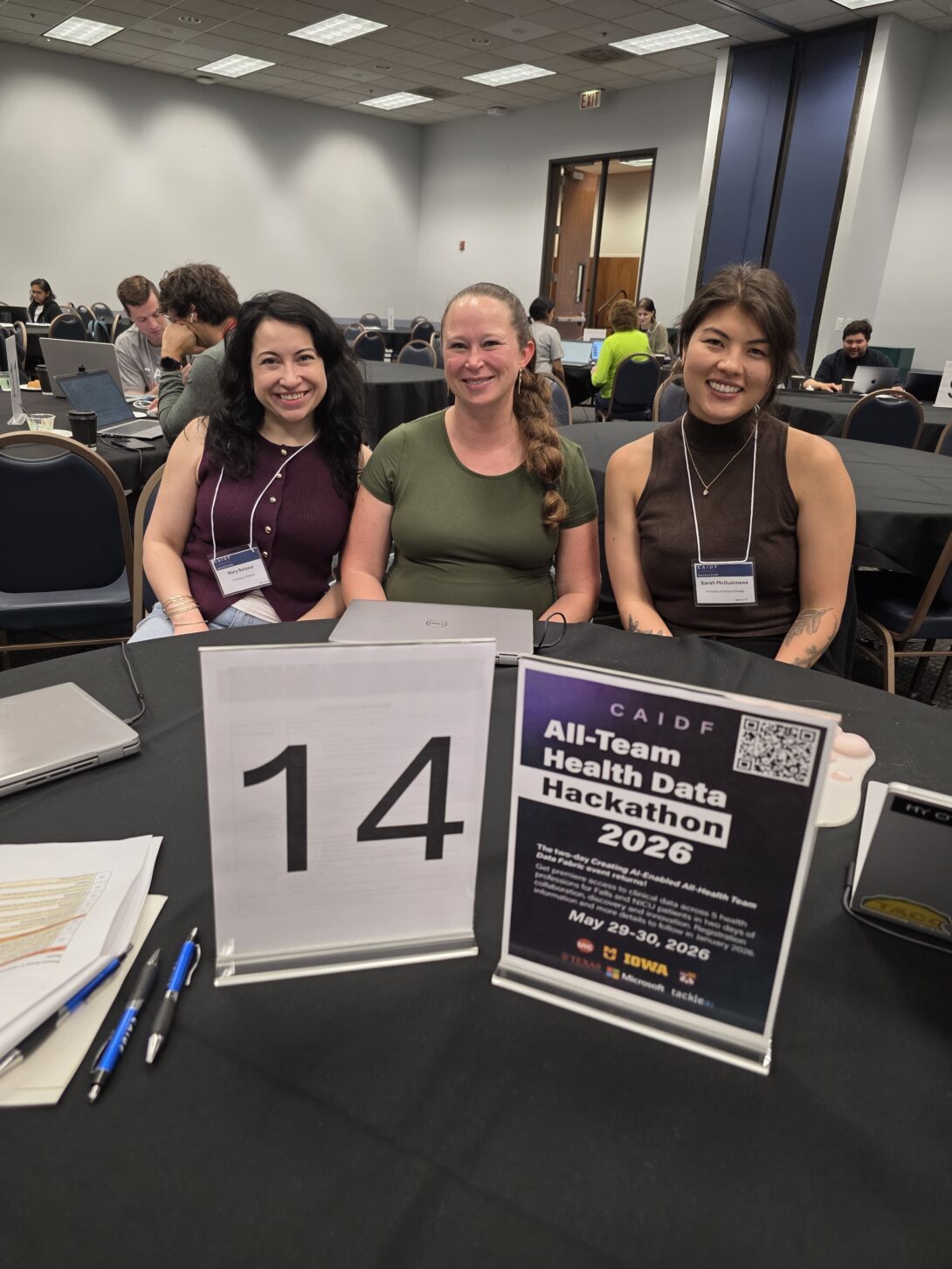
Jayalakshmi Jain, PhD student in BHI, and Morgan Merrill, MS student in BVIS, were on one of the tied second-place teams; BVIS faculty member Sarah McGuinness was on the other. Jain and Merrill built a personalized fall-prevention tool for use during hospital discharge, and McGuinness created a program focused on closing the loop of care.
Led by Boyd and his co-principal investigators, Catherine Craven of the University of Missouri and Karen Dunn Lopez of the University of Iowa, CAIDF has secured up to $10 million from the federal Advanced Research Projects Agency for Health to elicit innovations like these. Other AHS-affiliated investigators on the CAIDF team include Tanvi Bhatt ’05 PhD Movement Sciences (PT professor), Sam Bond ’16 MS BVIS (PT and BVIS clinical assistant professor) and Mary Khetani (OT and RS professor).