KN students offer free sports psychology counseling to young athletes around Chicago
Introduction
During the 2024-2025 school year, 289 Chicago-area youth athletes received free sports psychology consulting from kinesiology graduate students, developing skills that enhance their sports performance and
Led by KN clinical assistant professor Meredith Wekesser, graduate students in the Performance, Sport and Exercise Psychology concentration have worked with hundreds of athletes in high school or elementary school since the program’s beginning in spring 2024. Offering both team and individual services, along with in-person and online consultations, the PSEP students help athletes build the type of confidence in sports that can be applied to their everyday lives.
“All of our work focuses on promoting positive youth development through sport,” Wekesser said. “We aim to teach athletes skills they can transfer to school, work or with friends and family: handling stress, confidence building, goal setting, communication, focus, responsible decision making, leadership, positive self-talk, growth mindset and teamwork.”
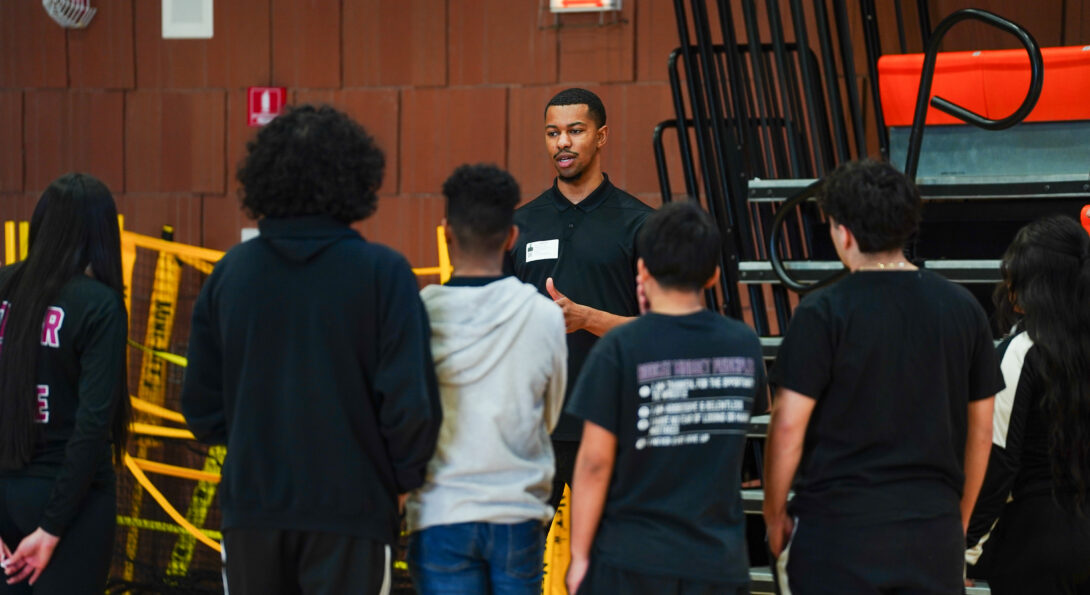
For teams and large groups, the PSEP students lead workshops on a particular skill and then practice the concept with a hands-on activity. Individual athletes can also work one-on-one with a graduate student for more personalized support. For example, a PSEP student might help an athlete practice advocating for themselves during a difficult conversation with a coach or teammate.
The program is also a valuable learning experience for the PSEP students, most of whom are training to become Certified Mental Performance Consultants through the Association for Applied Sport Psychology. Beyond earning experiential learning credit toward their degree, PSEP students are gratified by the opportunity to support young people and develop their own careers.
“My favorite part is seeing the growth young athletes are able to make,” said PSEP student Marvin Delos Reyes. After graduation, he plans to build a private practice to work primarily with this population.
“I want to create a space where [young athletes] can control their situation in a positive way. I think it's important to start teaching these skills while they're in the developmental phase, as mental skills can be used in both sport and other areas of life.”
But the most important takeaways come from the young people, who are building skills that will serve them no matter where their athletic careers go from here.
“I learned to visualize successful outcomes and translate it to real games and practices,” said a high school baseball player. Other athletes discussed the importance of “taking deep breaths in high stress situations” or “learning ways to handle pressure.”
“This initiative has been a great way to give back to the Chicago community,” Wekesser said, “to support youth in becoming better people both in sport and in life.”