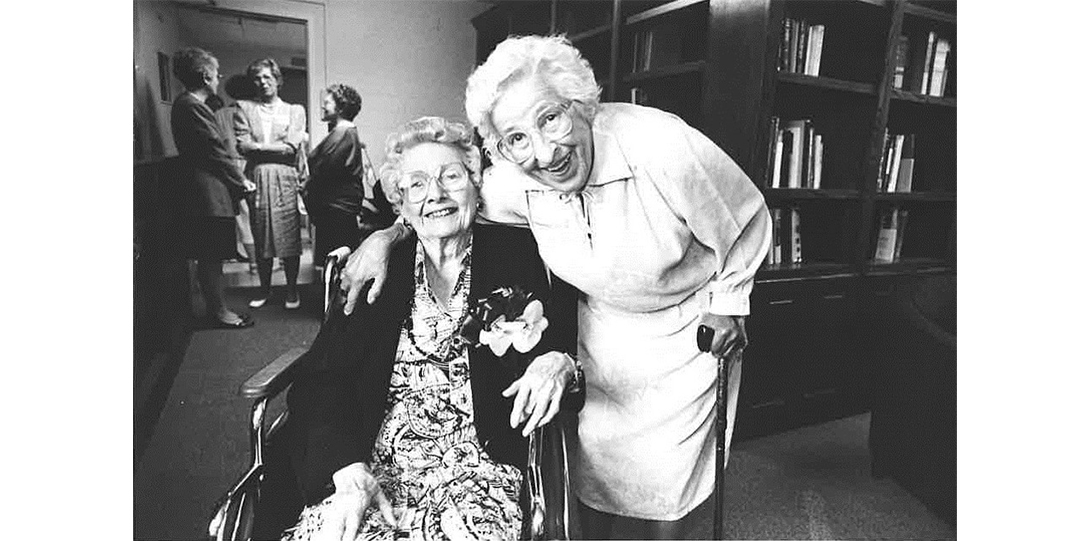
Beatrice D. Wade
Founder and Director of the Curriculum, 1943-71
A pioneering leader in occupational therapy education, Beatrice D. Wade established one of the nation’s earliest programs and helped define the profession’s independence, standards and clinical integration.
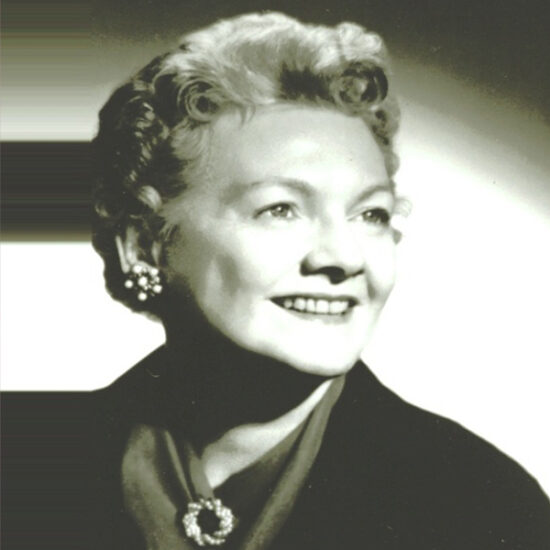
Therapists shouldn’t be technicians, and physicians shouldn’t be directors of occupational therapy.
Early life and education
Early life and education
Beatrice Dorothy Wade was born Jan. 13, 1903, in Butler County, Iowa, the youngest of 10 children in an Irish Catholic family. Her father, John Francis Wade, served as a state senator, shaping her early understanding of leadership and public service.
She earned a Bachelor of Arts in liberal arts from the State University of Iowa in 1924 and began her career with clinical training at Chicago State Hospital. She went on to work in psychiatric settings, including the Psychopathic Hospital at the University of Iowa from 1924 to 1927, building foundational experience in mental health practice.
Wade later pursued specialized training in psychiatric occupational therapy at Cornell University. By 1930, she expanded her clinical experience into pediatric and general practice through work at Michael Reese Hospital and Cook County Hospital in Chicago.
From 1931 to 1941, Wade served as a psychiatric nursing instructor at the Illinois State School of Psychiatric Nursing, where she taught occupational therapy principles and mental hygiene. In 1941, she established an occupational therapy curriculum at Michigan State Normal College (now Eastern Michigan University) before resigning in 1943 in defense of occupational therapy as an independent discipline.
Building a program at UIC
In 1943, Wade returned to Chicago to establish the occupational therapy curriculum at the University of Illinois. She accepted the role on the condition that the program be housed within the College of Medicine, reinforcing its standing as a medical discipline.
She served as director of occupational therapy curriculum and director of occupational therapy clinical services at the University of Illinois Hospital. Wade developed the department’s first Bachelor of Science program, combining study at the Urbana campus with clinical education in Chicago.
She also introduced the “Illinois Plan,” an innovative model integrating classroom instruction with hands-on clinical experience. This approach became a defining feature of the program and influenced occupational therapy education nationwide.
In 1944, the University of Illinois was one of eight institutions selected to offer the U.S. Army War Emergency Course, which rapidly prepared therapists to treat injured soldiers during World War II.
Establishing professional independence
In the late 1940s, efforts by rehabilitation physicians to control the occupational therapy curriculum and clinical referral process challenged the profession’s autonomy. Wade led a sustained effort to preserve the department’s independence.
In January 1951, the College of Medicine formally recognized occupational therapy as an independent department, and Wade was appointed department head.
Her leadership during this period helped establish occupational therapy as a distinct profession with its own educational and practice standards.
Contributions to the profession
Wade’s influence extended far beyond the University of Illinois, shaping the direction of occupational therapy nationwide.
She played a key role in defending the profession’s autonomy during the 1940s, advocating against efforts to classify occupational therapists as technicians. Working with national leaders, she helped establish the principle that occupational therapy is an independent profession.
Her contributions also include:
- Advancing a model of education that integrates classroom learning with clinical practice
- Helping develop and evaluate the first national registration examinations
- Promoting public awareness of occupational therapy, including organizing an exhibit at the 1933 Chicago World’s Fair
- Establishing policies supporting therapists’ direct accountability to referring physicians
The “Illinois Plan” she developed became a widely adopted model, emphasizing instruction led by practicing clinicians and grounded in real-world application.
Scholarship and legacy
Wade made significant scholarly contributions to the field. She authored psychiatric chapters in the first and second editions of Willard and Spackman’s Principles of Occupational Therapy, a foundational text in the profession. She also served as division editor for psychiatry for the American Journal of Occupational Therapy.
Her legacy continues through numerous honors and institutional recognitions. She was inducted into the City of Chicago Hall of Fame in 1970, and her portrait is displayed in City Hall. At the University of Illinois Chicago, her impact is reflected in the Beatrice D. Wade Library and named departmental awards.
In 2017, she was recognized among the 100 influential individuals in the history of occupational therapy by the American Occupational Therapy Association.
Wade received the American Occupational Therapy Association’s Award of Merit and was named a Fellow of the Association. Her leadership helped shape occupational therapy education, governance and mental health practice for generations.
Leadership and accomplishments
National and State Leadership
- First vice president, American Occupational Therapy Association (1955–61)
- Member, AOTA Board of Management
- President, Illinois Occupational Therapy Association (1936–40)
Professional and Public Service
- First woman elected to the Executive Committee, College of Medicine, University of Illinois
- Appointed to the Defense Advisory Committee on Women in the Services (1959–62)
- Trustee, Joint Commission on Mental Illness and Health
- Member, World Federation for Mental Health
National and International Impact
- Spearheaded the 1943 campaign for expanding eligibility in the federal vocational rehabilitation law to include individuals with mental health conditions
- Co-founded Recovery, Incorporated (now Recovery International), a peer-led mental health organization
- Provided technical assistance in developing occupational therapy education and services in Chile
Research and Publications
- Contributed to early editions of Willard and Spackman’s Principles of Occupational Therapy
- Division editor for psychiatry, American Journal of Occupational Therapy (1946–52)
Honors and Awards
- Award of Merit, American Occupational Therapy Association
- Fellow, American Occupational Therapy Association
- Award of Appreciation, American Medical Association
- Distinguished Service Award, University of Illinois Alumni Association
- Honorary Lifetime Membership, Illinois Occupational Therapy Association